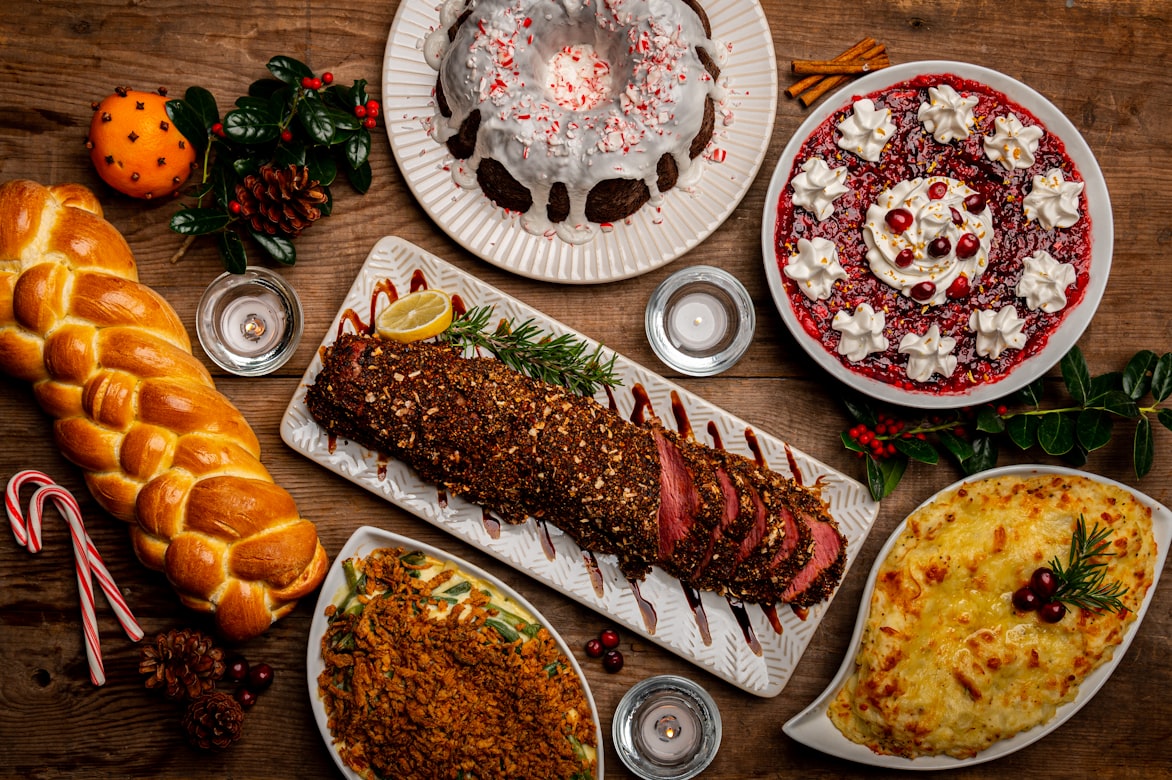
I made a remark at one point last year about people's obsession with Jell-O, during my two part Christmas collaboration with Victoria of Playing 50's Housewife. At the time I was specifically speaking about one very particular comment made by fellow Okie and Vintage Blogger Lisa, from over at Retro Housewife Goes Green; the comment in question came, at the time, from their post about Thanksgiving Menus, wherein they say:
I think it would be fun to have a 1950s style Thanksgiving at some point. I feel like that menu would need some kind of jello salad though, even if the menus I’ve found surprisingly didn’t suggest any. Can you really have a mid-century dinner without something encased in jello?
My little nip was, in the moment, one part tired sigh and one part genuine snark and salt; a bit of a "here we go yet again" meets a "sure Jan" of sorts.
The cheerful, bright-eyed, and almost bambi-esque willingness of people in the vintage and vintage homemaking communities to flagrantly ignore the real history that's desperately smacking them upside the head with a well floured rolling pin (in this case, the blatant lack of evidence supporting Jell-O molds role in holiday menus- or most menus at all), in favor of this hyper-caricaturized Stepford Housewife nonsense they seem to need to believe in so desperately... Honestly... The longer you do this, the more tiring it gets. And I can't imagine that constantly searching high and low, year after year, and still never actually finding anything to feed into your confirmation bias (to the point you're even willing to point out its lack yourself), can't be more tiring than just giving into the obvious reality already:
Jell-O Molds Just Aren't That Into You, Debbie
The fact of the matter is, for all cookbooks and advertisements were shoving whatever they could into Jell-O at madhouse speeds for a variety of reasons I could wax poetical about here... Most people just didn't eat them; not only did they require precious space in an already small, difficult to de-ice, and incredibly expensive refrigerator? But a lot of them just weren't that good (or so the reactions tell- for now). Depending on what kind of a madhouse masterpiece you were creating, too, they could also be incredibly step and labor intensive to prepare. And if you already had a trillion things to juggle, putting the finishing touches on your wild and wonderful Jell-O Cake Centerpiece just wasn't on the menu plan.
But all that being the case, it did really get me wondering what a real Christmas menu actually looked like- the obvious Jell-O mold near universally being excluded. And I actually got a decent enough glimpse of that last year during the preparatory stages of my Christmas challenge. Plus, nothing quite beats curling up on the couch with a cup of Honey Crisp and your hoard of Cook Books before Christmas, and planning your Christmas Dinner menu... Unfortunately I've been relieved of that duty this year; my Father in Law's company has a tradition of contracting out with local Grocery Stores to give all of their staff gift cards for the holiday season. But with the food shortage impacting everyone this year, the Grocers have understandably backed out of that tradition. So instead they've contracted with a local barbeque place we all love and adore, but usually only get on one of the Boys' birthdays.
Thus our Christmas dinner will be filled with the smell of delicious, slow smoked, spiced Pork not of our own making. But I'm not complaining an ounce about being freed from the burden of cooking a holiday meal- especially since my Husband and I have replaced it with a day of romantic spousal baking filled with Stollen, Peanut Butter Cookies, Chocolate Chips, and Apple Cinnamon Oatmeal Cookies. What a dream... But it has left an interesting little menu sized hole in my heart after last year's Christmas, and so I've had food on my mind quite a lot as this year's celebrations grow ever nearer. And I may not be cooking this year, but the Vintage Homemaker in me still can't shake the desire to pour over old menus.
This year, however, I want to dig in a bit deeper and look a bit more broadly across the ages. And this time I'm only interested in the food, and nothing else. And while Exempla and Cookbooks aren't always a great way to get a realistic look at what people were actually putting on their own tables, they're still an interesting way to get a glimpse at what could have been making its way there. And when tempered with surviving menus from real establishments serving real courses, a broader and more realistic picture can be painted (at least slightly so).
In that regard we're lucky many times over, for Archive.org- one of my favorite resources of all time for accessing an absolute wealth of old books and materials for historical research- happens to have quite a decent number of items in its collection on this topic. Archived resources are limited, and are heavily reliant on a number of factors, so it takes some digging and some doing. But with the right finesse, the few menu-only records I can dredge up on a cold Winter evening begins to paint us at least a tiny portrait of how the Christmas Dinner has changed from the 1910's through to 1960- give or take some of the obvious wiggle room and accounting for Survivorship Bias and the like... And we start, perhaps, with what may be the most lavish- the most extravagant and ostentatious- menu of them all.
If you were in San Diego, California, in 1916, at the Panama-California International Exposition, you may have been able to purchase a Christmas dinner curtesy of the Cristobal Café for a mere $1.50 a plate- almost $40 in today's currency ($38.25 to be exact). But the menu almost makes it worth it: You have an Oyster Cocktail; Consommé Medicis and Cream of Chicken, Sultane; Medaillon of Salmon, Genevoise, with Sliced Cucumbers, and Potatoes Duchesse; Larded Tenderloin of Beef, Richelieu; Roast Turkey with a Chestnut and Truffle Dressing and Cranberry Sauce; Roast Prime Beef Ribs with Yorkshire Pudding; Roast Young Pig with Baked Apple; Roast Mallard Duck with Fried Hominy; Mashed Potatoes, Brussel Sprouts, Green Peas, Candied Sweet Potatoes; Waldorf Salad and Cheese Sticks; Celery, Salted Nuts, and Olives; Roquefort Cheese and Toasted Crackers. And for dessert, Christmas Pudding with Brandy Sauce, Mince Pie, Pumpkin Pie, Apple Pie, Tutti Frutti Ice Cream, Cristobal Fruit Cake, Petits Fours, and a Demitasse.
Truly some fine dining. By comparison, in 1918 the Canadian Troops in England during the first World War were given a rather paltry Christmas Dinner consisting of just Pea Soup, Turkey and Dressing, Apple Sauce, Cabbage, Potatoes, English Plum Pudding with a Vanilla Sauce, and a side of Cheese and Bread; deliciously edible, and certainly far more recognizable to us today as what it is. But a far cry from the fancy schmancy options of the elite from just a few years prior.
The 1930's Volume 43, Issue 5, of the Ontario Agricultural College Review also tackles the topic of Christmas Dinner and is kind enough to provide a menu. It suggests a Tomato Juice Cocktail served alongside "Assorted Hors d'Oeuvres" before an entre of Creamed Mushrooms, with Celery Curls, Ripe Olives, and Radish Rose fingerlings. For the main, a Roast Turkey with Gravy, Dressing, a "Garnish of Chestnut Cakes", Duchess Potatoes, Spinach, Buttered Cauliflower, and Cranberry Jelly (which I assume is similar to our modern solid variations on the Cranberry Sauce). Next are a Fruit and Ginger Ale Salad and Cream Dressing. Then it suggests either serving an English Plum Pudding with Brown Sugar Sauce or a Napoleon Pie, alongside Mints, Fruit, Nuts, and Coffee for dessert.
Since "the heavy meal is not as smart or as popular as it once was", a second lighter menu option is provided on the adjacent page "to suit the circumstances". Here we are given the options of Cream of Corn Soup, plus a salad of Lettuce, Cucumber Wedges, and Red Dressing (I surmise this is an early variation on Thousand Island or Russian Dressing). This is followed by something called the Twenty Four Hour Fruit Salad, then by Walnut Cake with Mocha Icing, Christmas Cake, and Bon Bons, and the guest's choice of Tea or Coffee; it's a bit heavier on the desserts, but certainly easier on the stomach as promised.
Moving upwards in the years, a 1942 broadcast of the Homemaker's Chat, subject "Our Soldiers' Christmas Dinner", announced quite proudly that the fictitious soldier "John", being stationed "over in France- or in Italy - or on an island in the Pacific Ocean" during the second World War, would have had a Christmas Dinner of Roast Turkey, Sage Dressing, Giblet Gravy, Snowflake Potatoes, Green Peas, Asparagus, Cranberry Sauce, and Candied Potatoes, alongside Celery, Pickles, and Olives for fingerlings, a Fresh Fruit Salad with Mayonnaise, some Hot Rolls with Butter, Hot Mincemeat Pie and Icecream for dessert, and a ration of Candy, Coffee, Fruit, Nuts, and Coffee to top it all of. "Surely no one could want a finer feast" indeed. But as the broadcast warns: That is only the master menu, planned months in advance. While it's to be followed closely, the reality is not always as sweet- especially during wartime.
In December of 1949, just after the second World War, the Oakland Naval Base Hospital of California in the United States served a Christmas spread boasting Shrimp Cocktails and Tomato Aspic as a starter, with Mixed Olive and Stuffed Celery fingerlings- followed up with Roast Broad Breast Turkey with Chestnut Dressing, Giblet Gravy, Whipped Mashed Potatoes, Buttered Fresh Asparagus Spears, Lettuce Salad with Thousand Island Dressing, Buttered Parkerhouse Rolls, Cranberry Sauce, and Candied Sweet Potatoes. For dessert they offered Pistachio Ice Cream, Mincemeat Pie, Plum Pudding With Hard (presumably meaning 'Brandy') Sauce, a Fresh Fruit and Nut Bowl, or Christmas Candy. You could also get Coffee or Milk.
Their 1952 menu a few years later contains several similar items, but also some major differences; it starts off with various fingerling appetizers such as Green Onions, Sweet Gerkin Pickles, Radish Buds, and both Ripe and Green Olives, before moving into a main course of Roast Young Tom Turkey served with Southern Dressing, Giblet Gravy, Mashed Potatoes, Buttered Asparagus, Creamed Carrots, a Lettuce and Tomato Salad with Thousand Island Dressing, Cranberry Sauce, Candied Yams, and Hot Rolls and Butter. If you were still hungry after all of that then you could follow it up with Mince Pie, Coffee, and Ice Cream, some Candy, or Nuts.
In 1958 the very same Naval Base Hospital in Oakland, California, reprised some of their old items- and brought in quite a ew new ones; starting with the trusty Shrimp Cocktail of 1949, they followed it with Radish, Carrot Stick, Green Onion, Green Olive, Stuffed Celery, and Ripe Olive fingerlings. Afterwards a serving of Cream of Tomato Soup with Saltines before the main course, where things go back to normal a bit: Roast Tom Turkey served with Giblet Gravy, Sage Dressing, and Cranberry Sauce. But then there is an additional Roast Loin of Pork served with Applesauce. Further on the menu Snowflake Potatoes and Glazed Sweet Potatoes appear next to Fresh Frozen Succotash, Buttered Spinach, and Hot Poppyseed Rolls with Butter. For dessert, Ice Cream and a rather plain Pound Cake- and then it's back to the usual Christmas Candy or Nuts, and your choice of Coffee, Milk, or Tea.
Though it's sadly been taken down now (although I'll still link to its old location anyways just for posterity's sake), Cooking for Christmas, published in 1950, contained an entire section of suggested menus for Christmas Dinner, which I used to help myself plan our holiday meal last year. And while I don't remember the book well enough to remember where the section was located within the book- nor how many menus there were total? I did manage to take screenshots of at least a few of them last November while it was still available. And like with the menus above, Cooking for Christmas' menus don't disappoint either.

Menu I suggests Grapefruit Wreaths as a starter, followed by an Oyster Bisque as an entre set against a fairly traditional main: Roast Turkey, Gravy, your choice of a Bread and Mushroom Stuffing or a Chestnut and Sausage Stuffing, Whipped Potatoes, Winter Squash, Creamed Onions, Glazed Turnips, Cranberry Almond Sauce, Celery, Olives, Radish Roses, and Ice Box Rolls. For dessert, a flaming Plum Pudding with either a Hard of Yellow Brandy Sauce, and Frozen Pudding with a Claret Sauce, plus Stuffed Dates, Italian Macaroons, and Pecan Panóche- with Coffee, Sweet Cider, or Champagne to be served as drinks.
If you want something fancier than that, they have you covered; Menu II suggests you start the night off right with either a Sherry or a Port, to be served with Smoked Salmon Canapés, and Oyster or Cherrystone Clam Cocktails. Next, break out your Chablis or California Folle Blanche for your main course consisting of Cream of Corn Soup with Garlic Popcorn, Roast Goose, your choice of either Wild Rice and Liver Stuffing or Olive and Celery Stuffing (is there really a comparison there, though?), Sautéed Potatoes, Chestnut Purée, Red Cabbage and Apples, Celery Curls, Currant Jelly, Almond Pickles, and Pumpernickel Bread. Dessert, of course, could be nothing less than a French Yule Log and Lime or Orange Cointreau Sherbet served up with a Red Burgundy or California Pinot Noir. And you can't have a Sauterne or California Sweet Semillon without some Christmas Cookies and a Fruit Centerpiece. If you're still feeling both festive and fancy you can even throw down some Coffee and Brandy; what a list.
Way too much? Not to worry, Menu III suggests a simple Melon Ball Cup to start, followed by a light Clam and Chicken Broth and a main course of Stuffed Crown Roast of Pork, Small Sliced Apples, Glazed Onions, Orange Sweet Potatoes, Brussel Sprouts au jus, Celery Curls, Olives, and Carrot Crisps. If you want a drink suggestion, it pairs a Claret or California Cabernet with a Festive Green Salad Bowl with French Dressing as a pallet cleanser before a dessert of Chestnut Pudding with Vanilla Ice Cream and Fudge Sauce- or a nice Champagne with a Small Fruit Bowl, Candied Fruit Peel, and Home Glazed Nuts; Coffee and Liqueurs optional.
Menu IV goes even simpler still, for a "small buffet" style meal- suggesting Shrimp Cocktail, French Oyster Pie, and a Yule Time Ham, alongside Holiday Salad, and the usual fingerlings of Stuffed Celery, Black Olives, Carrot Crisps, and Radish Roses. Saffron Bread and Ice Box Rolls bring up the rear, with Mince Pie and Vanilla Ice Cream for dessert, and your choice of "White Wine Punch" or Coffee as beverage. Don't forget the buffet wouldn't be complete without its Large Fruit Centerpiece, though.
But wait... What is that which keeps rearing its little gelatinous head throughout the centuries? Could it be the ubiquitous Jell-O mold? Indeed it is- in the form of the good old southern favorite, the Tomato Aspic! But frankly, if Tomato Aspic's limited appearance is as weird as the Christmas Table gets this year? I'm fine with that (and honestly, it's not that bad tasting anyways); the relatively boring, been there done that a million times before, Plain Jane boring reputation of the Tomato Aspic is certainly a far cry from the wild west of Jell-O molds some people are so convinced should have been horrifying tables everywhere en mass during the 50's.
The fact of the matter is that Christmas menus of yesteryear may have had their things that would make us wrinkle our noses in disgust- or tilt our heads in confusion. But they were wonderfully varied and well rounded in options. More surprisingly (at least, if you have warped views of how "bad" old food used to be), they held the same storied signs of tradition that many of our own tables do today... Indeed, the Christmas Dinners our Grandmothers (and their Grandmothers) were eating? Really weren't all that different than what we still eat today- though today the Turkey might be more at place on the Thanksgiving table in America, and a Ham on the Christmas one; menu options suggesting pork may have had the right idea, if potentially a few decades too early.
Comments
Post a Comment